
Per-seat pricing for email was our own pain point, and it made us ask why it exists at all. The marginal cost of running an email service is close to nothing — so why can’t we disrupt the market?

Pursuit Li
Founder, Omucloud · August 2026
When Omucloud launched, nearly every reply was one of two questions. They are fair questions and here are our answers.
“Free? So you're selling my data?”
No. Omucloud does not profile you, carries no advertising, and never uses your mail to train or improve any AI model — its only AI feature (Omu AI) is opt-in and reads only the message you ask it to answer. The security page sets out what is stored, who can reach it, and what is not recorded.
“Free? Then how do you make money?”
Not from this. Alano builds the CRM product and Opptymizer does the commercial deployment. That is where the business is. We want the companies using Omucloud to grow, and if one of them outgrows what this email service does, we would be glad — and we hope they consider Alano CRM Enterprise Version when that day comes.
There is no upsell inside the product either: signing up contacts no salesperson, nothing is held back for a paid conversation, and no obligation attaches to any of it. Who operates Omucloud has the group in full.
The assumption underneath per-seat pricing
Software has spent three decades training everyone to believe that one more user should mean one more fee. It feels like the natural order of things — obviously a second mailbox costs a second subscription, the way a second sandwich costs a second sandwich.
But it is worth asking why, because a mailbox is not a sandwich.
What one more mailbox actually costs
In 2026, open one more email address and count everything it consumes — compute, storage, the security work around it, the maintenance. All in, the marginal cost is close to nothing, and it keeps falling every year.
So why should the second mailbox cost the same as the first, every month, forever? The number stopped following the cost a long time ago. What it follows now is habit.
It reminds me of buying CDs
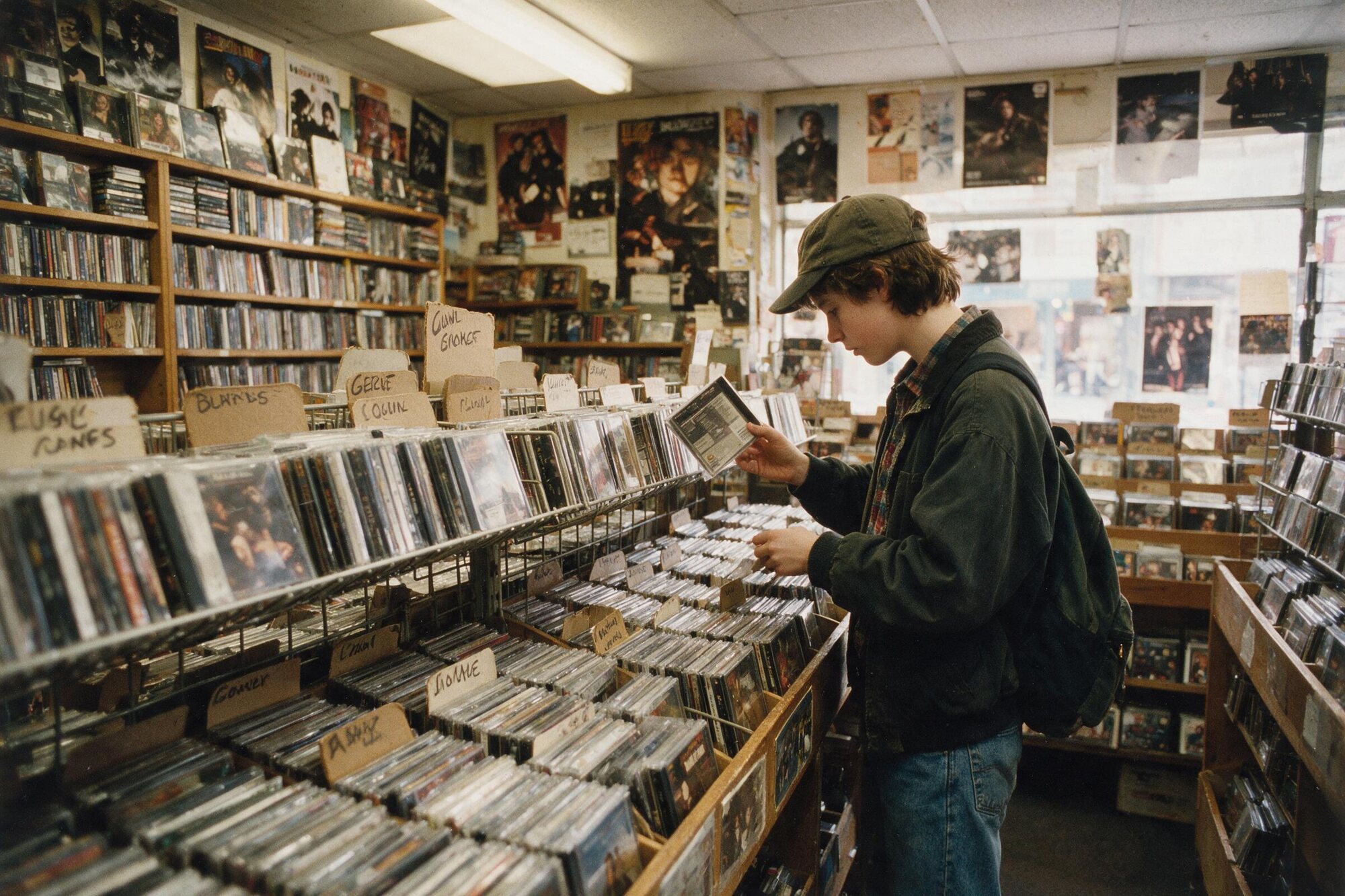

1980 – 2000s
Post-YouTube era
One CD, one payment
That was simply how music worked, and nobody thought to question it. If you rip the disc, put the files on BitTorrent or YouTube, the label's lawyers would come for you.
The label uploads to YouTube first
Every new single goes up on YouTube by the label itself, terrified you might not watch it. A show ends and 4K fancams of the whole set are online by morning.
1980 – 2000s
One CD, one payment
That was simply how music worked, and nobody thought to question it. If you rip the disc, put the files on BitTorrent or YouTube, the label's lawyers would come for you.
Post-YouTube era
The label uploads to YouTube first
Every new single goes up on YouTube by the label itself, terrified you might not watch it. A show ends and 4K fancams of the whole set are online by morning.
Music did not become less valuable. The way it gets paid for moved.
It moved off the sale of each copy and onto streaming, touring, sponsorship and licensing. The copy became the cheapest thing in the business, and giving it away became the sensible thing to do with it.
Software is on the same road
My view is that in three to five years, a great deal of software will not be priced the way it is priced today. More of it will be free at the point of use, and the value will sit where it is harder to copy — AI, implementation, automation, integration and training.
That is a prediction and not a fact, and you are entitled to disagree with it. But it is the one this company is built on, which is why free email here is not a radical decision. Given what we think happens next, it is the obvious one.
Why email, of all things
Because it is the most essential thing nobody notices. An address on your own domain is what makes a business look like a business, and it is usually the last thing a new one gets round to — parked behind a personal Gmail for a year because six dollars a mailbox a month is a real decision when there is no revenue yet.
I would like more people building. It has never been easier to ship a product without a team, and I want the people doing that to own the thing they make — the product, the domain, and the address on it, rather than renting all three. I run businesses myself and work with small ones, and every fixed cost you can take out of month one is one less reason not to start.
Removing this particular one is well within our means. So we removed it.
That is the argument · below is the arithmetic
Exactly what free covers
No subscription, nothing to cancel and no card form anywhere in the signup. Every feature that exists — a custom domain, two-way sending and receiving, attachments, inline images, reply-all, calendar invites, signatures — is free, however many addresses you create. The limits are real and they are all in one place:
- Email addresses on your domain
- Unlimited
- Attachment size
- 25 MB per message — one file or twenty
- Attachments per message
- 20
- Recipients per message
- 25
- Attachment storage
- 500 MB per accountUpgrade options available — from $20/moBusiness100 GB · $20/moScale1 TB · $100/moOne pool, shared by everyone on your domain — not an allowance each. Priced per domain, never per user.
- Attachment retention
- Kept until you delete them
- Subscription
- None — mailboxes are never billed
- Card details
- Never requested
- Custom domains
- One per account
Attachments count towards the 500 MB. Reaching it does not stop mail arriving — everything sent to you is still delivered and stored. What stops is attaching files to messages you send, until you free space from Settings. Message text and HTML never count towards it. If a mailbox needs more than the free 500 MB, the domain can add pooled storage: Business, 100 GB for US$20 a month, or Scale, 1 TB for US$100 a month, shared by everyone on the domain and never charged per person. Beside per-seat pricing that is close to nothing — US$20 a month is what a suite charges for about two seats, and here it covers the whole company. Attachments remain an experimental part of the product, so keep your own copy of anything you cannot lose.
The one thing you do pay for
Your domain. You register it in your own name at a registrar of your choice and keep full control of its DNS. Omucloud only asks you to publish MX, SPF and DKIM records so mail can be delivered and signed. Delete those records and mail stops flowing to us the same day — there is no contract to exit, because there was never one to sign.
A common .com runs about 10 to 15 USD a year and any registrar works. If you have no preference yet, these are the ones worth knowing about — no affiliate links, and we take no cut from any of them.
- Cloudflare Registrar
Sells at wholesale cost with no markup and no first-year discount that jumps later. DNS is on the same dashboard, which makes publishing the records a two-minute job.
- Porkbun
Cheap renewals rather than cheap first years, free WHOIS privacy, and a DNS panel that does not fight you. A good default if Cloudflare does not carry your TLD.
- Namecheap
Wide TLD coverage and frequent promotions. Switch Mail Settings to Custom MX before adding records, or its own email records keep winning.
- GoDaddy
The largest registrar, and the one most people already have an account with. Delete the default GoDaddy MX records before adding ours, or both sets stay live.
- Vercel Domains
Worth it only if the site on that domain is already deployed to Vercel, in which case the domain and its DNS sit beside the project.
 Cloudflare Registrar
 Porkbun
 Namecheap
 GoDaddy
 Vercel Domains
Whichever you pick, the records are the same everywhere — the setup guide has the menu path for each panel.
Registrar names and logos are trademarks of their respective owners. Omucloud is not affiliated with, endorsed by or sponsored by any of them.
Common questions
- Is Omucloud's free custom domain email a trial?
- No. There is no trial period and no expiry date on the mailboxes — free is where they stay, not an introductory rate that lapses.
- How can custom domain email be free forever?
- Because the marginal cost of one more mailbox in 2026 is very small, and because Omucloud is not the product this group sells. Alano Tech Pte. Ltd. builds an AI-native CRM and CDP platform, and its sister consultancy Opptymizer sells enterprise CRM, CDP, AI agent and marketing-automation work. Omucloud email is not expected to generate profit on its own. You buy your own domain from your own registrar, which is the only money involved.
- How is this different from other free email creating sites?
- Most free email creating sites are free because the address belongs to them: you get a handle on their domain, and that account is the hook for ads, an upsell, or a per-seat bill the moment you outgrow it. Omucloud creates the addresses on a domain you already own, so the asset is yours from the first day — and no number of mailboxes will ever move you onto a bill, which is what the rest of this page is about.
- So I am the product instead?
- No. Omucloud does not profile you, does not advertise, and never uses your mail to train or improve any AI model — its one AI feature is opt-in and reads only the message you ask it to answer. The website counts page views in aggregate; that is not a data business, and you are not the product of it. The security page sets out what is stored and who can reach it.
- What do I still have to pay for?
- Only your domain registration, paid to whichever registrar you bought it from — typically around 10 to 15 USD a year. The mailboxes cost nothing on top, however many you create.
- Will you start charging later?
- No. Unlimited addresses on your domain are free permanently and nothing you already have moves behind a payment. The only thing anyone can buy is extra attachment room, added because people asked for more than the free 500 MB. If a mailbox needs more than the free 500 MB, the domain can add pooled storage: Business, 100 GB for US$20 a month, or Scale, 1 TB for US$100 a month, shared by everyone on the domain and never charged per person. Beside per-seat pricing that is close to nothing — US$20 a month is what a suite charges for about two seats, and here it covers the whole company.
- Is this a loss leader for something else?
- It is honest to say the group would rather your business grow and later consider its CRM and marketing work than charge you a few dollars per mailbox now. But there is no upsell inside Omucloud: no sales contact triggered by signing up, no feature held back for a paid conversation, and no obligation of any kind.
- Are there limits I should know about before I move my mail?
- Addresses on your domain are unlimited, so the limits are all on attachments: 25 MB per message, whether that is one file or twenty, and 500 MB of attachment storage per account. Nothing is deleted on a timer: attachments stay until you delete them, and Settings shows what is using the space. Reaching the 500 MB does not stop mail arriving — it stops you attaching files to outgoing messages until you free some. Message text and HTML do not count towards the limit at all. Need more? Pooled storage for the whole domain from US$20 a month (100 GB), never per person — beside a per-seat bill, close to nothing.
No card, no expiry, no seat count. Bring your domain.
Unlimited addresses on a domain you own, sending and receiving, at no cost. If the argument above turns out to be wrong, the mailboxes described on this page stay free anyway.
Related readings
- Shared addresses, without a shared password
Unlimited people on billing@ or support@, each reading it in their own inbox — and no per-seat charge waiting at the end of it.
- A branded sign-in link for your team
Your logo and your domain on the page your colleagues sign in at — free, and no seat to count.
- Omucloud vs Cloudflare Email Routing & ImprovMX
Free too, and genuinely good — at forwarding and at sending from code. Neither gives you an inbox to open.
- Omucloud vs Zoho Mail Forever Free
The closest thing to a free custom domain mailbox from a big suite, and where its five-user cap and missing IMAP bite.
- How to set up a custom domain for email
The three stages end to end, with the DNS panel path for Cloudflare, Namecheap, GoDaddy and Squarespace.
- What Omucloud actually does
The product in one page — a real two-way inbox on the domain you already own.